
Wednesday, March 4, 2015
Coyotes in Minneapolis
A recent report by the Minnesota Department of Natural Resources says that Coyotes are thriving in the Twin City metropolitan are. While the report state that attacks on humans are rare, it is not uncommon for Coyotes to attack domestic cats and small dogs. Sterling Fence Inc has helped customers deal with this threat for many years.

Friday, January 9, 2015
Premix concrete versus site mixed concrete for fence installation, which is better?
In the residential fence installation business there is always a discussion on comparing the use of premixed concrete products such as Sakrete versus site mixed concrete to install fence posts. Site mixed concrete at Sterling Fence Inc. means mixing sand, gravel,portland cement and water in certain proportions in a cement mixer and pouring the footings with that mixture. We at Sterling Fence Inc. have been installing posts for 37 years and have found a place for both. The goal is to give the customer a solid concrete footing that will keep there fence straight and solid over its lifetime,
It is generally accepted that a compression strength of 2500psi is acceptable with fence installations, according to building code C387 which is the building code specification for packaged, dry combined matter for concrete. Premixed concrete such as Sakrete have 7 day compression strength of 3000psi and a 28 day strength of 4200psi. Site mixed concrete will yield similar results.
 How do we at Sterling Fence Inc. decide when to mix concrete and when to use a premixed product? It almost always comes down to which method will give us the greater efficiency which translates to a better value for our customers. At Sterling Fence Inc we pour concrete footings on every post with our residential fence installations. We dig an 8" diameter footing for our Western Red Cedar wood fence installations and a 6" diameter for our 4' tall chain link fence installations. Many projects require 30 to 70 concrete footings to be poured. Using the premix products is not as practical as site mix for us in terms of cost or efficiency although the resulting quality is the same.. On the other hand, in doing repairs where we may be replacing 4 or 5 posts, the premixed products work well.
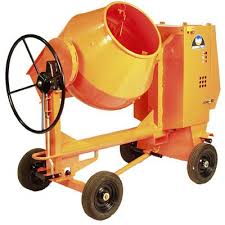
In summary, premix concrete products and site mixed concrete both have there place at Sterling Fence Inc. The main focus is to do the installation correctly with the fence looking straight and good over its lifespan.
It is generally accepted that a compression strength of 2500psi is acceptable with fence installations, according to building code C387 which is the building code specification for packaged, dry combined matter for concrete. Premixed concrete such as Sakrete have 7 day compression strength of 3000psi and a 28 day strength of 4200psi. Site mixed concrete will yield similar results.
How do we at Sterling Fence Inc. decide when to mix concrete and when to use a premixed product? It almost always comes down to which method will give us the greater efficiency which translates to a better value for our customers. At Sterling Fence Inc we pour concrete footings on every post with our residential fence installations. We dig an 8" diameter footing for our Western Red Cedar wood fence installations and a 6" diameter for our 4' tall chain link fence installations. Many projects require 30 to 70 concrete footings to be poured. Using the premix products is not as practical as site mix for us in terms of cost or efficiency although the resulting quality is the same.. On the other hand, in doing repairs where we may be replacing 4 or 5 posts, the premixed products work well.In summary, premix concrete products and site mixed concrete both have there place at Sterling Fence Inc. The main focus is to do the installation correctly with the fence looking straight and good over its lifespan.
Thursday, January 8, 2015
Mountain Split Rail Fence
Split Rail Fence is a type of fence that is constructed by splitting standard logs and using these rails to build fencing. Sterling Fence Inc. carries split rail in Cedar and Mountain Split Rail
Before barb wire became available in the late 1800's, one of the traditional fences constructed of rails split from logs which were rot resistant such as Chestnut or Yellow Locust. The rails were stacked in an alternate fashion, in a zig-zag pattern with an occasional post at the corners. As a variation of this style and a precursor to our modern style the rails were stacked in an alternate style in a straight line and sandwiched between posts in the line where they met the next rail.

 Today, our Mountain Split Rail fence is usually a 3 rail style, using hardwood rails and a treated Southern Yellow Pine or Locust posts every 10' along the fence line. The fence measures 48" to the top rail and the rails themselves overlap each other within the post preventing rails from falling out as horses push against the fence. With these heavy hardwood rails, this makes it ideal for equestrian uses, pastures and paddocks. It is installed without nails so you don't encounter accidents that loose nails can cause. Sterling Fence Inc has sold and installed mountain split rail for close to 40 years with many installation still in great condition on horse farms around the country.


Before barb wire became available in the late 1800's, one of the traditional fences constructed of rails split from logs which were rot resistant such as Chestnut or Yellow Locust. The rails were stacked in an alternate fashion, in a zig-zag pattern with an occasional post at the corners. As a variation of this style and a precursor to our modern style the rails were stacked in an alternate style in a straight line and sandwiched between posts in the line where they met the next rail.
Tuesday, December 16, 2014
Wrought Iron, Rod Iron or Rot Iron??
We are often asked if we install wrought iron fence. It has been called Wrought Iron,Rod Iron and sometimes even Rot Iron. Wrought Iron is the correct term. What the customers are usually really asking for is Ornamental fencing.
 The name wrought iron come from 2 forms of iron made by smelting, wrought iron and cast iron. It contains less than .1% carbon making it making it a material that can be worked with hammers into tools, weapons and yes, railing and fencing. Its use peaked in the mid 19th century as mild steel became available and inexpensive. Wrought iron is no longer used for commercial purposes. The term "wrought iron" in the fencing industry has become another generic term for ornamental fence.
In the early 20th century, fences which resembled wrought iron were made in fabricating shops. The material actually used was mild steel which was a good material at the time. That type of fence can still be found being done in some shops. It is commonly painted with a dip tank, black being the classic color.
The ornamental fence that most fence companies use today,is made of steel or aluminum. Sterling Fence Inc uses Jerith material. Jerith is the oldest and largest manufacturer of aluminum ornamental fence in North America.With this experience comes a knowledge of metals, alloys and powder coating is unmatched.
The name wrought iron come from 2 forms of iron made by smelting, wrought iron and cast iron. It contains less than .1% carbon making it making it a material that can be worked with hammers into tools, weapons and yes, railing and fencing. Its use peaked in the mid 19th century as mild steel became available and inexpensive. Wrought iron is no longer used for commercial purposes. The term "wrought iron" in the fencing industry has become another generic term for ornamental fence.In the early 20th century, fences which resembled wrought iron were made in fabricating shops. The material actually used was mild steel which was a good material at the time. That type of fence can still be found being done in some shops. It is commonly painted with a dip tank, black being the classic color.
The ornamental fence that most fence companies use today,is made of steel or aluminum. Sterling Fence Inc uses Jerith material. Jerith is the oldest and largest manufacturer of aluminum ornamental fence in North America.With this experience comes a knowledge of metals, alloys and powder coating is unmatched.
Friday, November 14, 2014
Sterling Fence Inc carries 11' mountain split rails in stock. These are hardwood rails and are from West Virginia. We sell replacement Split Rails and we also install complete split rail fencing
Thursday, February 13, 2014
How early can I get my fence installed this Spring
We are asked every day....how soon can we get a fence installed this Spring? The average start date for the Spring season in this climate is somewhere near the 1st of April. This date may vary dependent on the amount of snow, depth of frost in early Winter and of course temperature in March. In a typical Winter, the cold drives the frost deeper into the ground before an insulting snow falls. Once a significant snow falls, the frost does not continue to go deeper at the same rate. This year with the early cold, the depth of frost was significant.
While its impossible to forecast with certainty, the first week of April is a reasonable prediction of the start date for installations with Sterling Fence Inc.
While its impossible to forecast with certainty, the first week of April is a reasonable prediction of the start date for installations with Sterling Fence Inc.
Sterling Fence Inc new accreditation
On January 10th, 2014 Sterling Fence Inc. was accredited by the Better Business Bureau with a A+ rating. For 36 years, Sterling Fence Inc. has supported the Better Business Bureau in its mission to nurture and champion marketplace ethics and trust. Their constant campaign to expose marketplace fraud and deceptive business practices mirrors our own corporate philosophy. We are proud to be an Accredited Better Business Bureau member. Thank you BBB for your confidence in Sterling Fence Inc.
Subscribe to:
Posts (Atom)